Latest News: Indian steel sector posts steady growth in H1 FY 2026–27 * Mumbai's Jawahar Dweep becomes India's first plastic-free oil terminal * Indian security forces neutralise Lashkar-e-Taiba Commander, Musa aka Asif Fauji, in an intelligence-led operation in J&K

 Agriculture / Environment / Weather

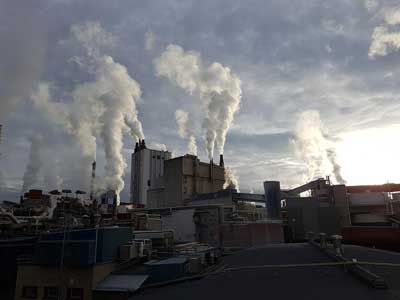
The micro, small and medium enterprises (MSME) sector of Indian industry accounts for close to 30 per cent of the country’s GDP. Despite such a substantial role played by the sector in India’s economy, its contribution to deteriorating air quality in cities and regions has rarely been assessed, analysed or highlighted.

Read More
Biodiversity conservation is an absolute imperative today, but is India serious about it? Notwithstanding the alacrity that the country has shown in ratifying and supporting international biodiversity conventions or in enacting domestic laws and regulations, India’s record in conservation and use of its bioresources has been quite dismal – finds an investigative analysis done by Down To Earth magazine.

Read More

With nine MLAs, three MPs, and one mayor all belonging to the ruling Bhartiya Janata Party, citizens in Agra are asking when will the water supply position in the eco-sensitive Taj Trapezium zone improve and the environmental conditions change for the better.

Read More

As Sri Krishna-Radha devotees in Braj Mandal celebrate the birthday of Yamuna recently their hearts are filled with disgust and frustration to see the plight of the river which is the lifeline of millions of people from Delhi to Agra.

Read More

A quarter-century of environmental activism, and a series of judicial interventions by the apex court, have not fundamentally changed the ecological conditions in the Taj Trapezium Zone, spread over 10,400 sq km. The pollution level continues to remain alarming, affecting both humans and stone.

Read More

The winter season has drawn to a close, but it has left alarm bells clanging. A new analysis by the Centre for Science and Environment, of winter air pollution trends in Delhi-NCR, says that while there had been a minor drop in the seasonal level compared to previous winters, the level is still extremely high, and far from meeting the safety standards. To get full access to this report, "Subscribe Now", in just Re.1/- for the next 24 hours.

Read More

“What does this intense heatwave that has hit large parts of India so early this summer really mean? It means that this is the age of climate change; it also means that how we deal with our water in the coming days will determine whether we would survive such extreme climatic conditions,” says Sunita Narain, director general, Centre for Science and Environment. To get full access to this story, "Subscribe Now", in just Re.1 for the next 24 hours...

Read More

In 2021, extreme weather events accounted for the maximum number of deaths in the states of Maharashtra, Odisha and Madhya Pradesh; and the largest number of districts were affected in Madhya Pradesh, Maharashtra and Uttar Pradesh. This emerged from a presentation made by Mrutyunjay Mohapatra, director general of meteorology, India Meteorological Department, at a 4-day national conclave of journalists being organised by the Centre for Science and Environment. To get full access to this story, "Subscribe Now", in just Re.1 for the next 24 hours.

Read More

Every winter, as inversion leads to smog-filled days and nights across entire north India, the western region of the country -- by contrast -- looks much cleaner. A new analysis of regional air pollution levels, done by the Centre for Science and Environment, says air pollution is rapidly becoming a matter of concern in the western states of Maharashtra and Gujarat as well. To get full access to this story, "Subscribe Now", in just Re.1 for the next 24 hours...

Read More

Cities in South India are some of the cleanest in the country when it comes to breathable air, but they still suffer from some influence of winter inversion and, resultantly, elevated pollution levels. The levels increase despite the geographical advantages and favourable meteorology due to the region’s proximity to the sea and improved ventilation – finds a new 2019-2021 analysis of winter air quality in India’s south, done by the Centre for Science and Environment. To get full access to this story, "Subscribe Now", in just Re.1 for the next 24 hours.

Read More