
 Samiksha Bharti News Service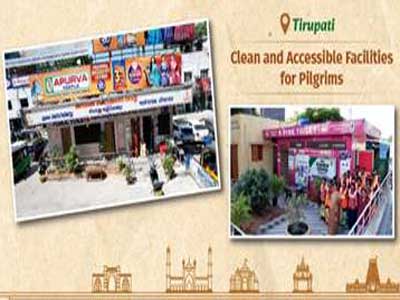
Under the Swachh Bharat Mission (Urban) 2.0, cities across India are taking concrete steps to make sanitation accessible and inclusive, particularly in high-traffic public spaces such as tourist hubs, busy markets, and transportation hubs.
Recognising that a truly garbage-free and liveable city must ensure clean and functional toilets for all, urban local bodies have been innovating to create modern, inclusive, and well-maintained public convenience facilities that serve lakhs of citizens and visitors every day.
Read in Hindi: बाजारों से स्मारकों तक स्वच्छता को दिया जा रहा है बढ़ावा
From pilgrimage towns to coastal cities and bustling markets, accessible sanitation is transforming the urban experience while upholding dignity, hygiene, and sustainability, under Swachh Bharat Mission Urban.
Tirupati, one of India’s most popular pilgrimage destinations, has prioritised cleanliness and accessibility as part of its civic infrastructure. The Tirupati Municipal Corporation has developed multiple modern toilet complexes catering to devotees, tourists, and residents.
A dedicated ‘Pink Toilet’ Complex for women near the bus station serves as a central facility interlinking Srinivasam, Vishnuvasam, the railway station, and the bus terminal. It offers Indian and Western toilets, restrooms, mother care and changing rooms, incinerators, and sanitary napkin vending machines. The facility caters to 12,000–15,000 users daily and is maintained through a structured three-shift cleaning system.
Additionally, a Common Public Toilet Complex near the railway station provides accessible sanitation for men, women, transgenders, Divyaang, and children, serving the 20,000–25,000 devotees visiting the Govindarajaswamy Temple area each day. Equipped with ramps, handrails, child-friendly fixtures, and bathing rooms, it ensures universal accessibility and hygiene in one of India’s busiest pilgrimage corridors.
The bustling town of Katra, the base camp for the revered Shri Mata Vaishno Devi Shrine, welcomes millions of pilgrims annually. To meet the demand for clean and accessible sanitation, the Municipal Committee Katra, under SBM–U 2.0, established a modern three-storey public toilet complex near Trikuta Bhavan, catering to around 1,000 users daily.
Designed for universal comfort, the facility includes gender-segregated sections, disabled-friendly toilets, and menstrual hygiene amenities such as sanitary napkin vending machines and incinerators. Professional upkeep by Sulabh International ensures 24x7 cleanliness and maintenance. The facility has enhanced the pilgrim experience by offering hygienic, safe, and inclusive sanitation, benefiting women, elderly devotees, and persons with disabilities, while improving the surrounding environment for vendors and locals alike.
Moving westward, the Navi Mumbai Municipal Corporation has developed Aspirational Toilets at Sector 14, Koparkhairane, a high-footfall area near the Nisargudyan urban garden. Catering to 8,000–9,000 visitors daily, this sustainably constructed facility is a model of eco-conscious urban design.
Built using 426 sq. m of recycled plastic sheeting, including 5.3 metric tons of single-use plastic, 11,700 plastic bottles, 35,200 bottle caps, 85 repurposed computer keyboards, and 284 kg of scrap metal, the facility exemplifies the principles of Reduce, Reuse, and Recycle. Gender-segregated sections, child- and disabled-friendly units, baby care stations, and sanitary pad vending machines ensure dignity and accessibility for all users. A fountain powered by treated sewage water adds to its sustainable design, making the complex a showcase of environmental innovation and civic pride.
Situated along the scenic Shanghumugham beachfront, the Thiruvananthapuram Municipal Corporation has established ‘Take a Break’, an aspirational public toilet facility developed with the support of the Swachh Bharat Mission (Urban) 2.0. Inaugurated in 2024, the initiative represents a significant step towards enhancing tourist convenience, public hygiene, and sustainable urban tourism.
The facility, catering to 200 users daily, comprises six European-style toilets and six urinals, with ramps and support handles ensuring full accessibility for persons with disabilities and elderly visitors. It is also transgender-friendly, reflecting the Corporation’s commitment to inclusivity and dignity for all users. An adjoining cafeteria offering light refreshments enhances user comfort, making the complex a welcoming rest point for tourists and residents alike.
In Bhopal, the Municipal Corporation has developed ‘Freshrooms’, smart and luxury public convenience centres under a DBOT model. Strategically located at the high-footfall 10 Number Market, the 800–1000 sq ft Smart Lounge serves 500–1,000 visitors daily and has transformed urban sanitation for shoppers, vendors, and commuters.
The facility features sensor-based toilets, touch-free urinals, hot and cold showers, a café, vending machines, lockers, Wi-Fi, baby-changing rooms, and a digital information wall. Separate and accessible facilities for men, women, and persons with disabilities make it inclusive and user-friendly. By integrating technology, comfort, and sustainability, Freshrooms exemplifies how innovative models can deliver world-class sanitation while ensuring financial self-sufficiency.
Through innovative designs, sustainable materials, universal accessibility, and rigorous maintenance systems, these facilities reflect a shared national commitment: ensuring that every citizen, regardless of gender, ability, or location, has access to clean, safe, and dignified toilets in public spaces.
Related Items
Western Media is ‘tough’ on India but ‘soft’ on China!
From 'Beacons' to 'Landmarks', India’s changing ‘Lighthouse’ story…
When students march, cockroaches protest and toilets charge €2...