
 Samiksha Bharti News Service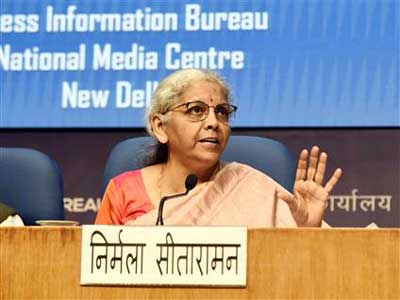
Finance Minister Nirmala Sitharaman announced many pronouncements to improve taxpayer services in the recent Interim Budget.
There is a large number of petty, non-verified, non-reconciled, or disputed direct tax demands, many of them dating as far back as the year 1962, which continue to remain on the books, causing anxiety to honest taxpayers and hindering refunds of subsequent years. The recent Interim Budget proposes to withdraw such outstanding direct tax demands up to Rs.25,000/- for the period up to financial year 2009-10 and up to Rs.10,000/- for financial years 2010-11 to 2014-15. This is expected to benefit about a crore taxpayers.
Read in Hindi: करदाताओं के लिए अंतरिम बजट में क्या है खास...?
No change relating to taxation has been proposed in the Interim Budget. The same rates for direct taxes and indirect taxes, including import duties, have been retained. However, to provide continuity in taxation, certain tax benefits to Start-Ups and investments made by sovereign wealth or pension funds as also tax exemptions on certain income of some IFC units have been extended by one year up to 31st March 2025.
Appreciating the taxpayers for their support, Sitharaman said that over the last 10 years, the direct tax collections have more than trebled and the return filers swelled to 2.4 times. She highlighted the fact the Government has reduced and rationalised the tax rates due to which under the new tax regime there is no tax liability for taxpayers with income up to Rs.7 lakh. She also mentioned about increase in the threshold for presumptive taxation for retail businesses as well as professionals.
The Minister also mentioned about a decrease in corporate tax rates for existing domestic companies from 30 percent to 22 percent, and for certain new manufacturing companies to 15 percent. In her Interim Budget speech, the Minister said that in the last five years, the Government’s focus has been on improving tax-payer services which has led to the transformation of an age-old jurisdiction-based assessment system, and the filing of tax returns has been made simpler and easier. The average processing time of returns has been reduced from 93 days in the year 2013-14 to a mere ten days this year, thereby making refunds faster, she added.
On indirect taxes, Sitharaman said that GST has reduced the compliance burden on trade and industry by unifying the highly fragmented indirect tax regime in India. Mentioning a recent survey conducted by a leading consulting firm, she said that 94 percent of industry leaders view the transition to GST as largely positive.
In her Interim Budget speech, the Minister highlighted the fact that the tax base of GST has more than doubled, and the average monthly gross GST collection has almost doubled to Rs.1.66 lakh crore this year. States too have benefited. States’ SGST revenue, including compensation released to states, in the post-GST period of 2017-18 to 2022-23, has achieved a buoyancy of 1.22.
The Minister said that the biggest beneficiaries are the consumers as reductions in logistics costs and taxes have brought down the prices of most goods and services. Mentioning several steps taken in customs to facilitate international trade, Sitharaman said the import release time declined by 47 percent to 71 hours at Inland Container Depots, by 28 percent to 44 hours at air cargo complexes, and by 27 percent to 85 hours at seaports, over the last four years since 2019.
Related Items
Bajaj Finance may not deliver spectacular short-term gains…
Budget promises decentralisation of urban development
BSNL offers ‘Diwali Bonanza’ with free mobile services for a month