A morning walk is no longer a leisurely activity. It has become a daily struggle. School children dodge speeding motorcycles while crossing roads. Elderly residents risk their lives because footpaths are missing or unusable.
Read More





A morning walk is no longer a leisurely activity. It has become a daily struggle. School children dodge speeding motorcycles while crossing roads. Elderly residents risk their lives because footpaths are missing or unusable.
Read More
Here's a modest request for our leaders and officials: spend just one day walking Agra's streets without a red beacon, a government car, or a security cordon. Only then will they understand that walking in this city has stopped being a simple errand and has become a daily ordeal.
Read More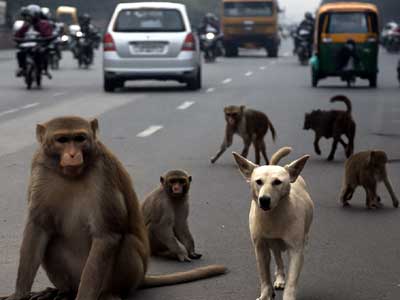
Exploding canine numbers, monkey raids, and wandering herds are turning the Taj City into a daily gauntlet for pedestrians and commuters.
Read More
Agra's air remains toxic for most of the year. Every day, thousands of trucks, buses and other heavy vehicles travelling from north to south and east to west add to the city's pollution burden.
Read More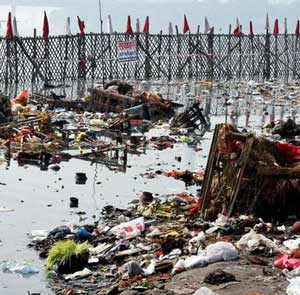
It sounds like a cruel joke. Yet that is the grim reality facing Agra. August has arrived with rumbling clouds and the scent of rain-soaked earth. Instead, the sky has worn a blank face. Farmers scan the horizon with anxious eyes, housewives count every bucket, and tube wells groan a little louder each day.
Read More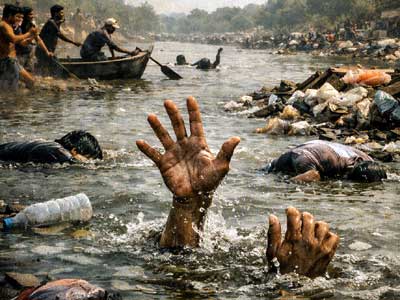
On summer evenings, the banks of the Yamuna River look very attractive. Cool breeze, families enjoying themselves, children's laughter, and the calm flow of the river; everything feels peaceful.
Read More
Agra is known worldwide for the timeless beauty of the Taj Mahal. Every day, thousands arrive to witness love carved in marble. But just beyond the tourist circuits, another industry thrives quietly: nursing homes, diagnostic laboratories, and private hospitals, with an extensive network of suppliers of medicines and equipment.
Read More
Agra has always been a city in transition. Long before planners, courts and district authorities began redrawing its maps, the Yamuna itself kept shifting its course umpteen times before settling into the channel that now brushes the Taj Mahal at its rear. Perhaps that was the first sign that Agra was destined to live with a peculiar restlessness; a “shifting syndrome” that continues to shape its politics, economy and psyche.
Read More
Agra’s buildings are not merely bricks, stones, and domes. They are centuries-old narratives of power and beauty, faith and coexistence, and an instinctive harmony with nature. Over five hundred years, Agra absorbed diverse civilisations and refined them into a distinctive urban and cultural identity. This city once believed that architecture could converse with rivers, gardens, and people. Today, that conversation is fading beneath noise, neglect, and pollution.
Read More
On Mirza Ghalib’s birthday, his couplets travel effortlessly across continents, languages, and generations. They are quoted in classrooms, shared on social media, sung in ghazals, and debated by scholars. Yet in Agra, the city where Ghalib was born in 1797, remembrance remains faint, formal, and painfully inadequate.
Read More